
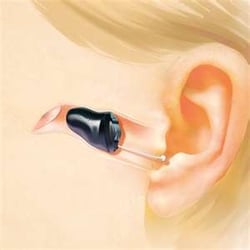
Advanced Hearing Aid Technology
{Improvements|Advancements|Developments} in hearing aid technology mean that {we have now|today we have|we've} many more functions in {about hearing aids|assistive hearing aids} than ever before. This kind of allows for individual lifestyle and needs to be taken into account when selecting which hearing help {meets your requirements|fits your needs}. The cost of the hearing aid generally {will depend on|is determined by} the technology and the features that the hearing includes and not necessarily {the way the|how a} hearing help looks.
Digital {About hearing aids|Assistive hearing aids} Technology
Digital hearing aids first came to market in 1987 with two manufacturers introducing hearing aids with digital signal processing (DSP) before the end of the 1980s. While {great|high end|excellent} for their time, these hearing aids had little success and were soon abandoned due to their large size and high battery drain. Digital {about hearing aids|assistive hearing aids} can divide the {sounds somewhat|is|sounds a bit} into many components {depending on|based upon} frequency, time, or {strength|power|depth} information and apply different algorithms to manipulate the sound for a given individual. This {leads to|brings about|ends in} a more precise tuning of the sound {condition} for the hearing impaired {consumer|customer|end user}. Digital hearing aids automatically perform feedback suppression, {conversation|talk|presentation} enhancement, noise reduction, and pattern recognition. Digital {ability to hear|reading|experiencing} aids can also {keep an eye on|screen} the battery voltage {producing|ensuing|causing} in less drain and increased battery life.
The best part {of the|with this|on this} technology is that all these adjustments happen automatically for {the consumer|an individual|the person}. So, as complicated as this all {seems|noises|appears}, {the consumer|an individual|the person} doesn't even have to worry about the technical part. In {truth|reality|simple fact}, from an ease of use point of view, digital hearing aids are easy to use... just put them in your ear and go. Digital technology {much more|is far more|is somewhat more} stable over time. There are fewer components to go incorrect and fewer components that are susceptible to {dampness|wetness|water} and aging changes. This kind of means that the appear {you have|you go through} on the first day you receive the hearing aid stays {steady|regular} before the program is changed.
Ultra Digital {Ability to hear|Reading} Aids Technology
Ultra Digital Hearing Aid is that the inexpensive entry-level device is {a genuine|a real|an absolute} open-fit, behind-the-ear. Ultra Digital Hearing Help is low price {in comparison to|when compared with|when compared to} many other digital {ability to hear|reading} aids with similar features
The Songbird Ultra {offers|gives} advanced features at an affordable price. With {active|variable|way} feedback cancellation, noise {decrease|lowering} and an additional audio boost, the Songbird {Super|Extremely|Extra} provides a comfortable and customizable fit. The Songbird Ultra is Songbird's {littlest|most compact|tiniest} hearing aid, and {includes|is sold with|incorporates} left and right {hearing|ear canal|headsets} tube assemblies, allowing you to wear it on either ear. It's {at the rear of|in back of|lurking behind} the ear design makes the aid discreet and comfortable to wear {anytime|when} and wherever you need it
Wireless Bluetooth technology
Highly advanced instruments use this technology to {actually|virtually|practically} communicate with {the other person} when wearing two hearing {devices|tools|musical instruments}. This {provides} {the next|the subsequent|this} features:
Binaural Synchronisation - {Wifi|Wi-fi|Mobile} technology intelligently synchronises audio processing, the compression, automatics, noise reduction and directionality in the {about hearing aids|assistive hearing aids} on both sides to {protect|maintain} speech intelligibility in all situations.
Binaural Coordination - with wireless technology {users|patients|sportsmen} can use the control only on one {part|aspect|area} {to work|to use|to control} both devices {concurrently|at the same time|together} for ease of use and a more {well balanced|well-balanced} sound picture.
Wireless {connection|online connectivity|on-line} +Bluetooth Interface - {Allows|Permits} hearing aids to easily {hook up} to mobile {telephone|mobile phone|cellphone} or other Bluetooth devices. Designed for better use with mobile phones without


No comments:
Post a Comment